
 Mark Ainsworth
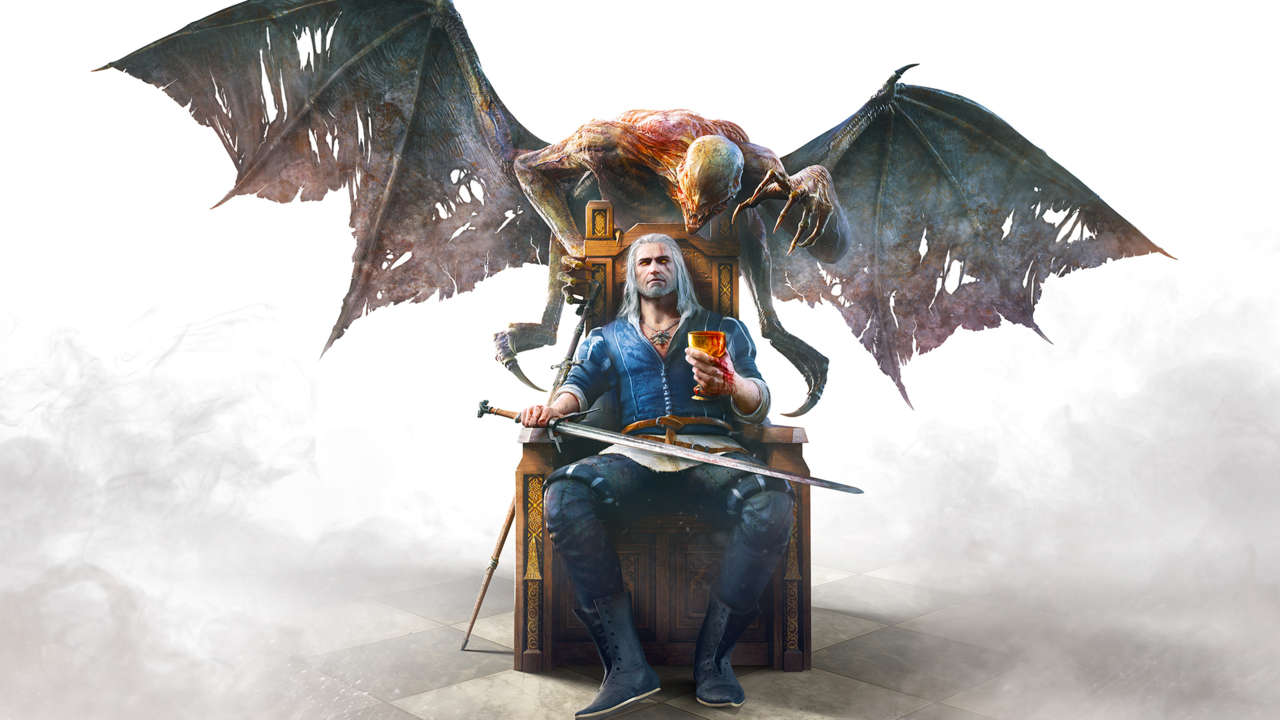
Everybody loves going on a summer holiday, trading the everyday humdrum locale for brighter and sunnier pastures and that’s how Blood and Wine feels both in tone and aesthetic appearance. The Witcher III’s main narrative took place within the northern kingdoms all of which are torn apart by war where corpses litter the ground, the wildlife is vicious with bandits and various creatures and monsters waiting to hack you down and the general outlook while beautiful in its own way is tremendously bleak.
 After receiving a call for help from the Duchess of Toussaint, a southern land unscathed by war, Geralt finds himself travelling to a place previously only mentioned in stories and unseen in the games that has always been described to be an almost fairy tale location that’s vibrant and full of colour. Knights roam the land conforming to the ideals of virtue, compassion and honour; it’s such a stark difference from Wild Hunt’s campaign and even Hearts of Stone the previous expansion that it really does feel like a new game. Upon reaching Toussaint we learn that there is a beast on the loose killing said knights of the realm and causing the aristocracy to go into meltdown. It’s rather comical from both the player’s perspective and no doubt Geralt himself that a handful of murders can throw a whole region into chaos. In the northern lands this type of thing is just another Tuesday afternoon. Upon vowing to hunt the killer dubbed “The Beast of Beauclair” the tale spins off into a well written tale featuring faces from the past and vampires.
 In order to delve through all the quest has to offer just focusing on the main story it would take players roughly 18 to 20 hours to complete which in itself is a fantastic return on the price of entry given that a lot of new releases these days can have less than half the time investment for double the price. If like me you’re a completionist then that is another 10 hours’ worth of content to get your teeth into. As with the main campaign before it there is a plethora of side quests to complete and discover ranging from the standard “kill these bandits at locations x, y and z” to more varied ones that retain the offbeat humour that the series has always had underneath. For instance there is a side quest in which you must return the stolen testicles of a statue and that’s not even the strangest event you’ll see in Blood and Wine.
As if the land of Toussaint wasn’t big enough by itself, roughly it’s the size of all the Skellige isles put together, there are other areas to visit offered through the adventure. Without going into spoiler territory there is one in particular in the latter sections of the expansion that is hands down my favourite of any place in the previous games and perhaps in an RPG this generation. The contrast between that and anything we’ve seen before is nothing short of magical, literally. There is an expression from the developers and charm displayed that simply isn’t found elsewhere due to its uniqueness. Such a delight is it that even non fans would be able to appreciate it.
 Changes to aesthetics don’t just stop at the change of colour palette for scenery. Players are now able to change the hues of their armour meaning you can finally wear that piece of plate that previously was a little too gauche. This is a welcome addition for those like me who base characters equipment almost solely on appearance even at the cost of reduced stats. You can do this via the use of armour dyes that can be bought or found throughout the land of Toussaint. You’ll more than likely make use of these during your time as there is a plethora of new armour and indeed weapons to be found and received from various quests. There are even 5 new sets of master craftsmanship sets that each have their own missions wherein you must find the diagrams for the blacksmith to make. These sets each have unique bonuses upon creation and are bestowed for wearing all the pieces of a particular set.
Where Hearts of Stone mechanically focused on tweaking the interface and functionality of the menus making them simpler and easier to navigate; Blood and Wine brings with it additions all of its own. If, like so many others, you cannot stay away from CD Project Red’s card game sensation Gwent then you are in for a treat. An entire new faction deck based upon the Skellige Isles has been introduced and comes coupled with quests to match, including an amusing tournament wherein you are forced so used said deck and face opposition from Gwent purists to the very existence of a new deck.
 Mutations have also been further expanded as players unlock the ability to equip mutations that bring extra bonuses and even new skill slots to utilise. The bonuses can range from extra power in combat to extended time usage of the magical signs at Geralt’s disposal. These are unlocked very late on within the expansion leading to the conclusion that they are most likely to assist with the higher difficulty of New Game Plus. Their effects are not just limited to stats however as you can enable mutations which make enemies explode upon death. With tweaks like this they feel more akin to modifiers and make for a more varied experience.
Blood and Wine allows players to use the character they have played the main game with or start afresh with an automatically levelled Geralt. The game is implicit in its advice in that you need to be prepared to travel to Toussaint and should ideally be around level 35 or so otherwise combat may be a little too unforgiving for some. In addition to the higher levelled enemies and incoming damage therein, the bosses are also much tougher than those found in the main campaign. When playing through the original Wild Hunt most boss encounters amounted to just an out and out back and forth skirmish of damage, block or dodge, heal and repeat. This time out there is a little more thought and consideration required to take them down, this is reinforced early doors when Geralt must take down a giant. In order to efficiently deal with him careful timing is required and you can benefit greatly from the use of certain bombs to slow it down.
 A Witcher owning a home may seem like a strange prospect but the developers have heavily hinted that this is the end of the road for Geralt and you can certainly feel that throughout your time in Blood and Wine. There are many reflective questions and time spent looking back at his life and at the end of the day whether he even likes being a Witcher or if he would have chosen differently should the choice have been presented to him. The biggest sign of this in the gameplay is the aforementioned home. Upon completion of an early quest players are bestowed with a rundown basic vineyard that may be upgraded and renovated accordingly.
 This allows you to store all those armour sets that you would have previously thrown away, displaying the sets on armour stands is a neat touch as is the ability to hang weapons throughout the house. Ultimately the customisation boils down purely to the weapons and armour displays and a few pictures or trophies hung in set locations. This may feel like a missed opportunity as the upgrades are a set linear path that just requires more coin to obtain. Having multiple aesthetic upgrade choices rather than just the singular path would have been welcome. Whilst the customisation may feel bare there is no doubting the usefulness of the vineyard. It provides a stable for your horse, Roach, that when upgraded grants a stamina boost. Similarly there is a bed that can be upgraded for vitality boosts for Geralt. You are also afforded farmland to grow crops and an alchemy station to brew the numerous concoctions available.


GIPHY App Key not set. Please check settings