
 Adam Sharpley
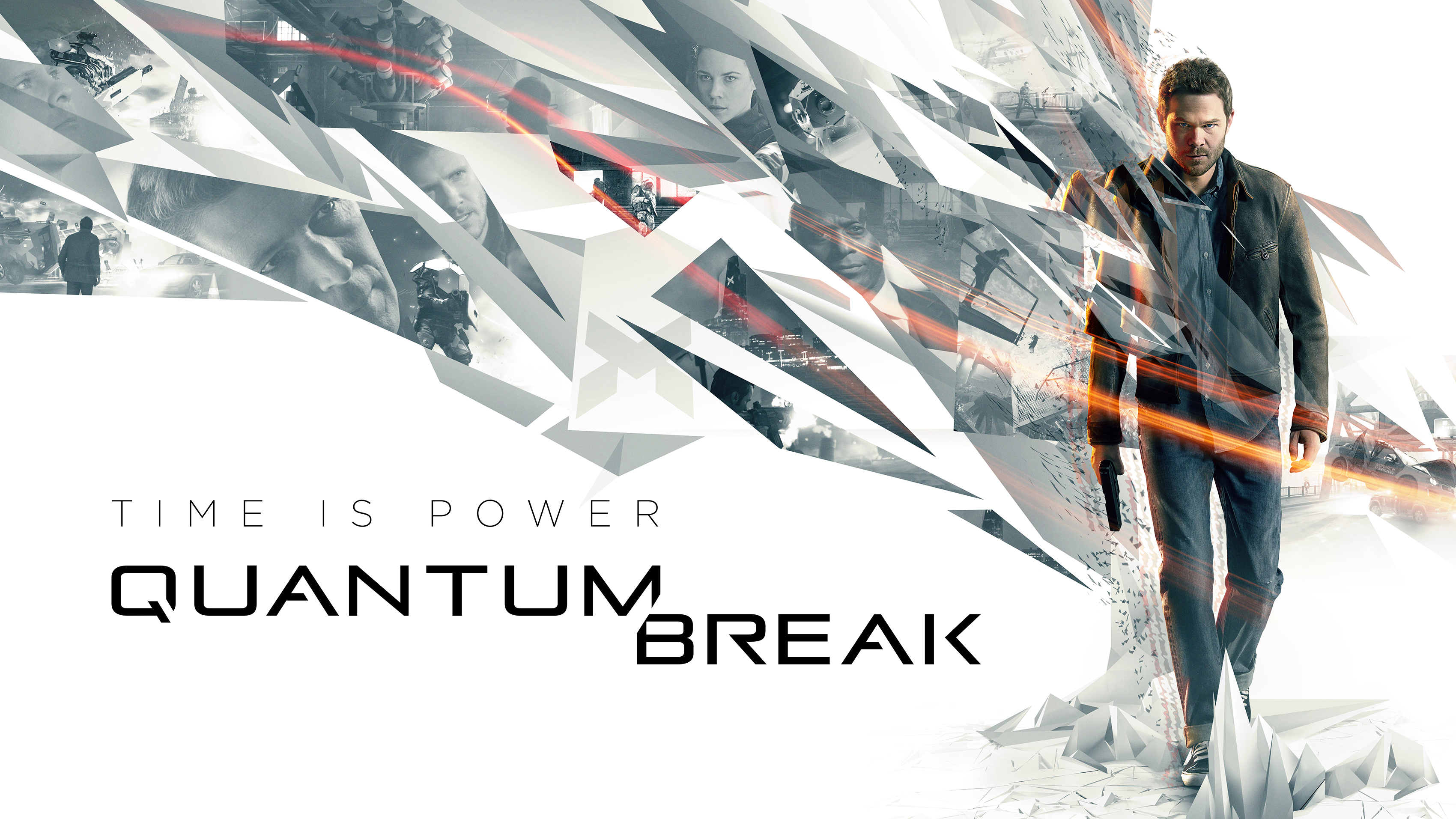
Quantum Break is a mish mash between Video Game and TV show, casting well known actors; Shawn Ashmore (X-men’s Iceman) and Aidan Gillen (Game of Thrones’ Petyr Baelish) playing protagonist and antagonist respectively. We start the game with Jack Joyce (Shawn Ashmore) being interviewed about the events which lead to a fracture in time. Paul Serene (Aidan Gillen) has asked for Jack’s help with an experiment which he is running at their hometown’s university. When you arrive, Paul explains that his team have cracked time travel. Unfortunately, Jack’s brother William (Dominic Monaghan – Lost/Lord of the Rings) panicked investors claiming the project was too dangerous.
In an attempt to prove the experiment a success, Paul has Jack send him back two minutes into the past. As Paul enters the machine, his future self emerges and they bro hug about their success. Ready to fully test the machine, Paul wants to travel five minutes into the future. William arrives as Paul enters, warning time is about to break and the experiment needs to stop. Unfortunately, as Paul enters the machine for the second time, a fracture in time occurs. Trapped, Paul has no option but to go through the machine as planned, especially due to the arrival of people shooting at them.

Exposed to the fracture, it becomes apparent that Jack has gained some timey wimey wibbly wobbly powers. Chased by super evil corporation Monarch, Jack and Will fight to escape and fix the fracture before time completely stops. The fracture leads to time stopping occasionally, with Jack’s exposure to ‘chronons’ from the experiment making him immune to these stutters. Throughout the game, stutters provide some amazing set pieces. Stutters and the scenarios they occur around are the stand out portions of the game, in particular a scene where a boat crashes into a bridge. Navigating through the debris of a bridge as time randomly pauses, rewinds and fast forwards proved to be thrilling visually. Along with the stutters, one area named ‘Ground Zero’ has become particularly warped. Time around Ground Zero constantly shifted back and forth, warping between the years and events that had happened in the area. Quantum Break’s environment is by far it’s most impressive feature and Remedy entertainment took full advantage of the game’s concept with these sections of the game.
At the end of each Act, your perspective is changed to Paul, who also gained powers from the experiment. His trip in time has changed him, although I won’t spoil the nature of this change. With his powers, Paul can see elements of the future that will change according to his choices. This affects both the game and the TV show elements, along with some interactions within the game called ‘Quantum ripples’ which build upon the live action scenes. Whilst these choices sadly don’t change the overarching plot, the changes to the tone and interaction of the characters within the game and episodes can be quite significant. Some choices will lead to deaths of the supporting cast from as early as your first choice. The episodes themselves are also quite praiseworthy, being around 20 minutes in length each. A supporting cast which is mainly in the background of the game get the most screen time, in particular two Monarch employees feature heavily. Whilst the acting is enjoyable, the TV show left me wanting more time with characters who were more present in the game. The show built characters which Jack barely interacted with, and this served to disconnect most of the show from the game. Jack himself barely featured in the show, which likely was to avoid players feeling left out but instead only made me feel like Jack was the least developed character. Even now, after finishing the game, watching the alternative scenes and reading the narrative collectibles I am still uncertain as to what Jack’s personality really his. The disconnection between the game and show made it apparent to me that the game was lacking the strong narrative present throughout the show.

Levels in Quantum Break are mainly broken down into two segments, explorative puzzle platforming and shooty action sequences. Both of these sections feature stutters within them. During action sequences, Jack fights with enemies in possession of chronon suits which allow them to move during the stutters. Breaking these protective suits causes enemies to freeze in the stutter. Stutters during exploration allow Jack to rewind elements of the level to progress. There is an apparent lack of diversity in the gameplay elements, with the first two acts showing all the five acts has to offer. Jack’s powers develop and strengthen throughout the game, but the gunplay quickly becomes repetitive once new powers are established. Enemy types are also extremely lackluster, consisting only of goons and slightly bigger goons. Weapons are also limited; a few different types of pistols and SMGs, Assault rifle, Light Machine Gun, Shotgun and a Carbine rifle are all that feature. Encounters all blend by following the same set-up; Jack platforming to a new area, entering some cover on arrival with baddies surrounding him. Combat also lacks any challenge. My first playthrough was completed on hard with the majority of my deaths being accidental ones in the platforming sections. Every goon was dealt with in the same manner, shoot or punch them until all are dead. For some enemies this requires more bullets or hitting a specific weak spot. At the latter stages of the game a monster appears, which only moves in stutters and completely destroys swarms of enemies. Unfortunately, the genuine terror which this enemy could have presented was squandered by “It” spooking Jack before disappearing. Jack is clearly terrified by the presence of said monster but the game fails to capitalise on this, quickly returning to the trope of shooting more goons.
Quantum Break has a relatively well thought out plot which only suffers from the same issues time travel fiction brings about. A recurring theme in the game is that trying to go back and change events only leads to those events happening anyway. Personally I find this element frustrating as it feels like events are set in stone, actions inevitably lead to the same outcome and characters have no free will. This is evidenced by one supporting character whose fate is tragically determined due to the circular logic of events, which leads to one of the strongest emotional moments in the game. Whereas for other characters, collectibles are present which provide background context. Unfortunately, elements of the game’s plot depend on the player reading quite lengthy emails/notes to fully understand the characters. For instance, I still feel confused about Martin Hatch, Paul’s right hand man, even after reading all of the clues about his character. Reliance of these collectibles leads to many of the cast feeling underdeveloped and forgettable.

Unfortunately, Quantum Break promises an innovative game but delivers an enjoyable live action episodes but generic gameplay. Whilst the acting impressed and most characters were somewhat interesting, less effort seems to have been given to actually making a video game. Levels serve more to tie in a well written if not predictable plot. Gameplay quickly becomes a repetitive cycle of platforming and shooting for the reward of plot advancement. The saving grace shines through the TV show and plot, which stops Quantum Break from being incredibly mediocre at best. Whilst the stutter set pieces and graphics were impressive for an Xbox One title, they did not blow me away. Add on that 1000 gamerscore (100% completion) can be achieved in 9-10, an hour of which was the TV show, the game lacks substance. Quantum Break failed to be more than an interesting experiment between reality and game. If there are any further entries in the franchise, they would benefit from being a TV show or film.




GIPHY App Key not set. Please check settings